· LeazeHub Team · Property Management · 2 min read
How Small Landlords Can Effectively Track Properties and Units
This article explains practical ways small landlords can keep detailed, organized records of each property and individual rental unit. Proper tracking helps with maintenance, tenant management, and financial clarity.
Why Property and Unit Tracking Matters
Keeping accurate and organized records of your rental properties and each individual unit is crucial, even if you only own a few units. Good tracking helps you know exactly what you own and manage, making other landlord tasks like maintenance, tenant communications, and accounting smoother. For example, knowing the square footage or appliances in a unit can speed up maintenance decisions or help you set correct rent prices.
Key Elements to Track for Each Property
- Property Address and Contact Info: Include the full location, phone numbers for neighborhood services (like trash pickup), and any property manager contact if applicable.
- Ownership and Insurance Details: Record landlord or management company info, insurance policy numbers, and coverage dates.
- Property Type and Features: Note if it’s single-family, multifamily, duplex, condo, or townhouse, plus amenities like parking, yard, or special systems (security or HVAC).
Important Unit-Specific Information
- Unit Number and Layout: Label units clearly and describe floor plans or bedroom counts.
- Lease Terms and Tenant Info: Have a quick reference for lease start/end dates, tenant names and contacts, and rent amount.
- Condition and Maintenance Records: Track any known issues or recent repairs specific to the unit.
- Utility Setup: Note who pays utilities and account numbers for quick reference.
Organizing Records for Effective Use
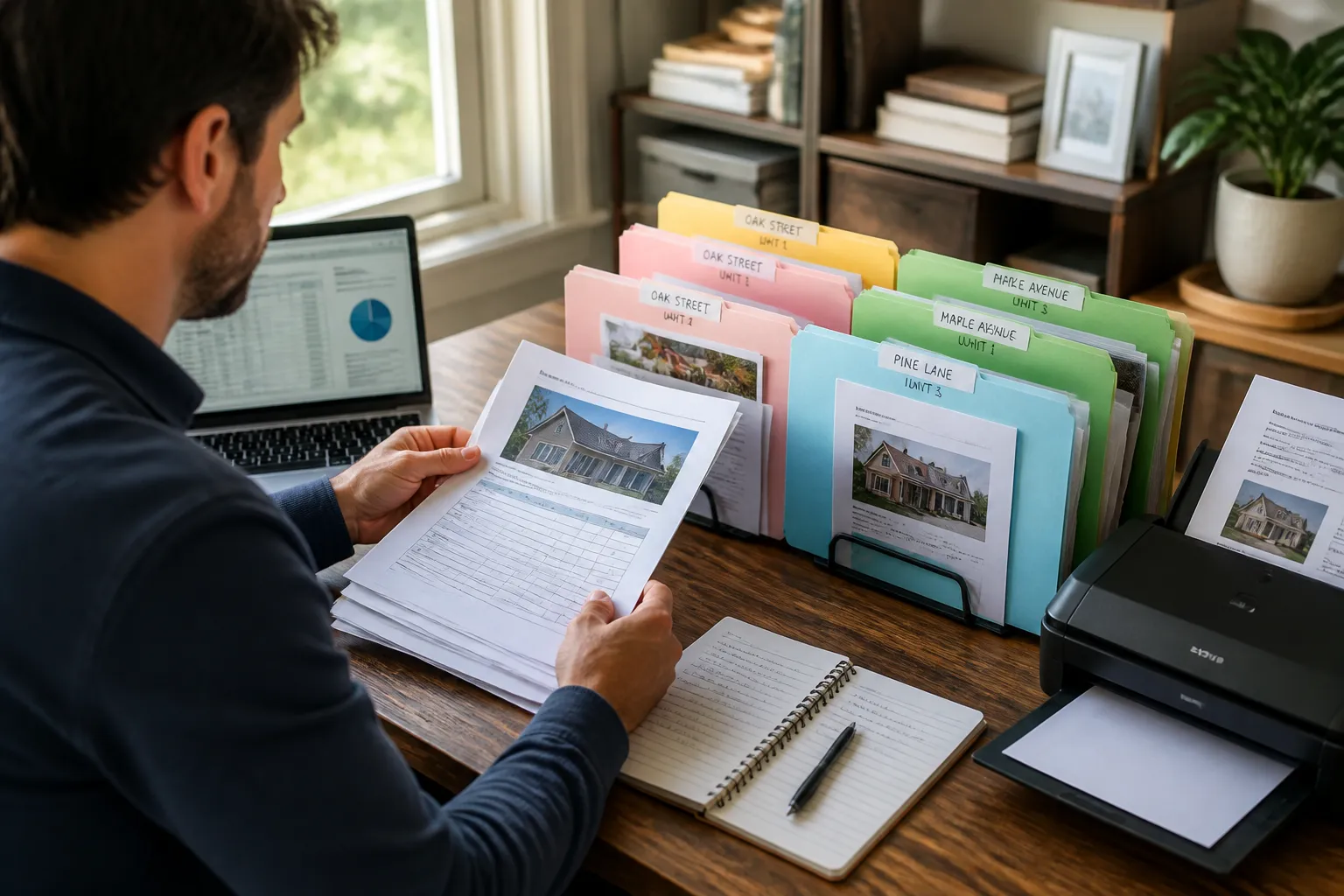
Maintaining physical folders labeled by property and unit works well if you prefer paperwork. Digital tracking with spreadsheets or dedicated property management software offers even easier updates and searching. Create a consistent file structure for leases, inspection forms, maintenance requests, and correspondence.
Practical Example
Consider a small landlord who manages three apartment units across two properties. They keep a spreadsheet with tabs for each property detailing unit numbers, tenant info, rent due dates, and notes on recent repairs. When a water heater fails in unit 3, they instantly find the installation date and maintenance history, enabling timely service without delay.
Benefits of Detailed Property and Unit Tracking
- Faster response to maintenance requests
- Clear understanding of lease terms and rent cycles
- Organized financial tracking by unit or property
- Reduced risk of missing lease renewals or tenant follow-up
- Easier preparation for tax or insurance documentation
By dedicating initial time to organizing your properties and units, you create a foundation that simplifies day-to-day management and supports growth.
Learn More
See software options that include property and unit tracking features to streamline your workflow, including tools at Avail and TenantCloud.
LeazeHub feature
LeazeHub includes Property and unit tracking. View this feature.